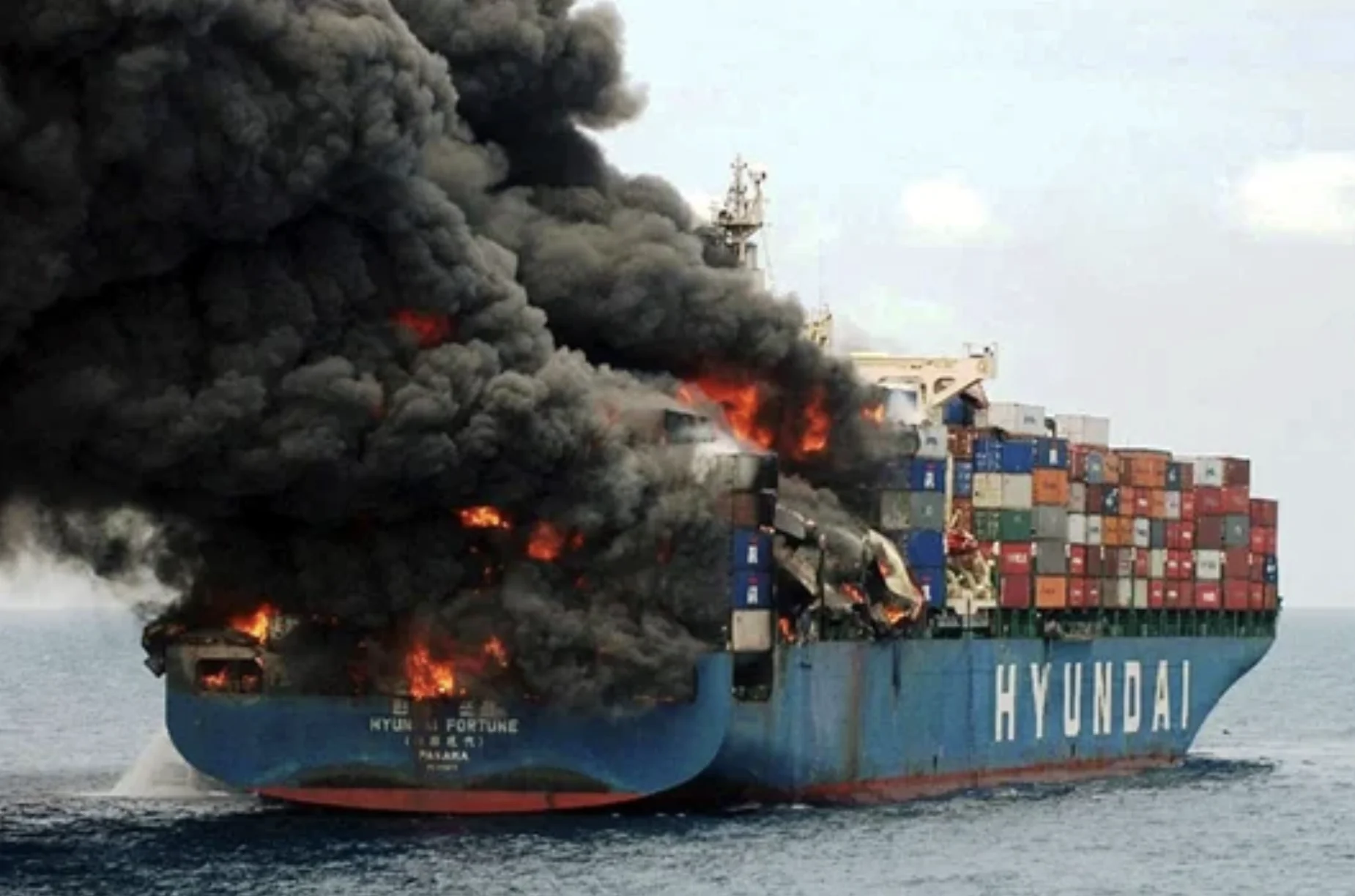
Maritime fires are becoming an increasingly serious concern across the global shipping industry, and a key driver behind this trend is the growing use—and misclassification—of lithium-ion batteries. Once largely confined to container ships, these fires are now affecting bulk carriers and car carriers, raising alarms among insurers, regulators, and safety experts alike. This issue is especially relevant to Louisiana, where busy waterways serve as international thoroughfares for vessels transporting the same types of cargo.
Recent data from insurer Gard highlights the scale of the issue. Gard members alone have reported 23 container fires, with some losses exceeding $10 million. Even more concerning is the spread of fire incidents into bulk shipping, particularly involving scrap metal cargo. Materials that are often declared as non-hazardous “Group C” cargo under the International Maritime Solid Bulk Cargoes (IMSBC) Code have, in several cases, been found to contain hidden lithium-ion batteries and other combustible materials.
A recent fire aboard the Nord Houston in South Wales underscores the danger. The vessel’s scrap metal cargo ignited while docked, requiring a major emergency response involving multiple fire crews, aerial platforms, and marine support units. Investigations suggest that undeclared hazardous materials embedded within the cargo may have contributed to the blaze.
The problem is compounded by misdeclaration under international shipping regulations. The International Maritime Dangerous Goods (IMDG) Code allows certain lithium battery-powered items—such as phones and laptops—to be classified as non-dangerous under specific conditions. However, improper packaging, concealed electronic waste, and inaccurate cargo declarations are leading to dangerous situations at sea. In some cases, entire shipments of used electric vehicles or e-waste have been mislabeled, bypassing critical safety requirements.
Statistics from QBE Insurance further illustrate the urgency: lithium-ion battery fires have surged by 147% since 2022, with UK fire services now responding to nearly five such fires per day. Industry experts warn that without stricter enforcement and greater transparency in cargo declarations, maritime fire incidents will continue to rise—posing risks not only on the open ocean, but also along heavily trafficked inland and coastal routes like those in Louisiana.
For seafarers, port workers, and others impacted by these incidents along Louisiana’s waterways and beyond, the consequences can be devastating—ranging from severe injuries to long-term health risks and financial losses.
If you or a loved one has been injured in a maritime fire, it is important to understand your legal rights. You can contact the Joubert Law Firm for a free case evaluation to explore your options and seek the compensation you may deserve.
As global trade continues to evolve, so too must safety standards. Addressing the risks posed by lithium-ion batteries is no longer optional—it is essential to protecting lives, vessels, and the vital waterways that keep commerce moving.