

E-Bikes, Speed, Helmet Rules, and What Happens in Crashes
E-bike (electric bicycle) technology is growing fast, but so are serious injuries. Below is an easy Q&A format explaining what e-bikes are, how they work, and how Louisiana laws and safety guidance can matter after a crash.
1) What is an electric bike and how does it work?
In its most basic form, an electric bicycle is a bicycle. It has pedals, wheels, handlebars, etc. You pedal it like a non-electric bike.
Where it differs is that it has an electric motor and a battery that provide power. There are two common ways power is delivered:
- Throttle-assisted e-bikes: You twist a handlebar throttle to get a boost (similar to a scooter).
- Pedal-assist e-bikes (most common): You pedal, and the motor provides assistance based on your pedaling.
Louisiana crash relevance: Whether your e-bike was throttle vs. pedal assist, and whether it operated within its intended class, can become important evidence in an injury case.
2) How long does the battery last?
Battery range varies by bike, but many e-bikes are typically about 20 to 50 miles per charge. Range can change based on:
- Terrain (hills vs. flat roads)
- Rider weight
- Assistance level used
- Wind and rough surfaces
- Whether the bike uses throttle (range may drop faster)
Charging usually takes around 2–4 hours, similar to charging other electronics.
Louisiana crash relevance: Riders sometimes push beyond their planned range, then face low battery power, reduced speed control, or rushed stops. Those factors can contribute to safety problems and accident outcomes.
3) How fast do e-bikes go?
Speed depends on the model and how it’s classified. In the U.S., many e-bikes support speeds up to about 20 mph, while some can reach 28 mph. Some regions outside the U.S. limit assist to lower speeds.
There are also throttle-operated models that can behave more like motor vehicles raising safety concerns, especially in traffic and at night.
Louisiana crash relevance: Speed is often central to crash severity and liability. Higher speeds can mean longer stopping distances and more serious head and trauma injuries.
4) Are e-bikes legal?
E-bike legality usually depends on the bike’s class and the rules where you ride.
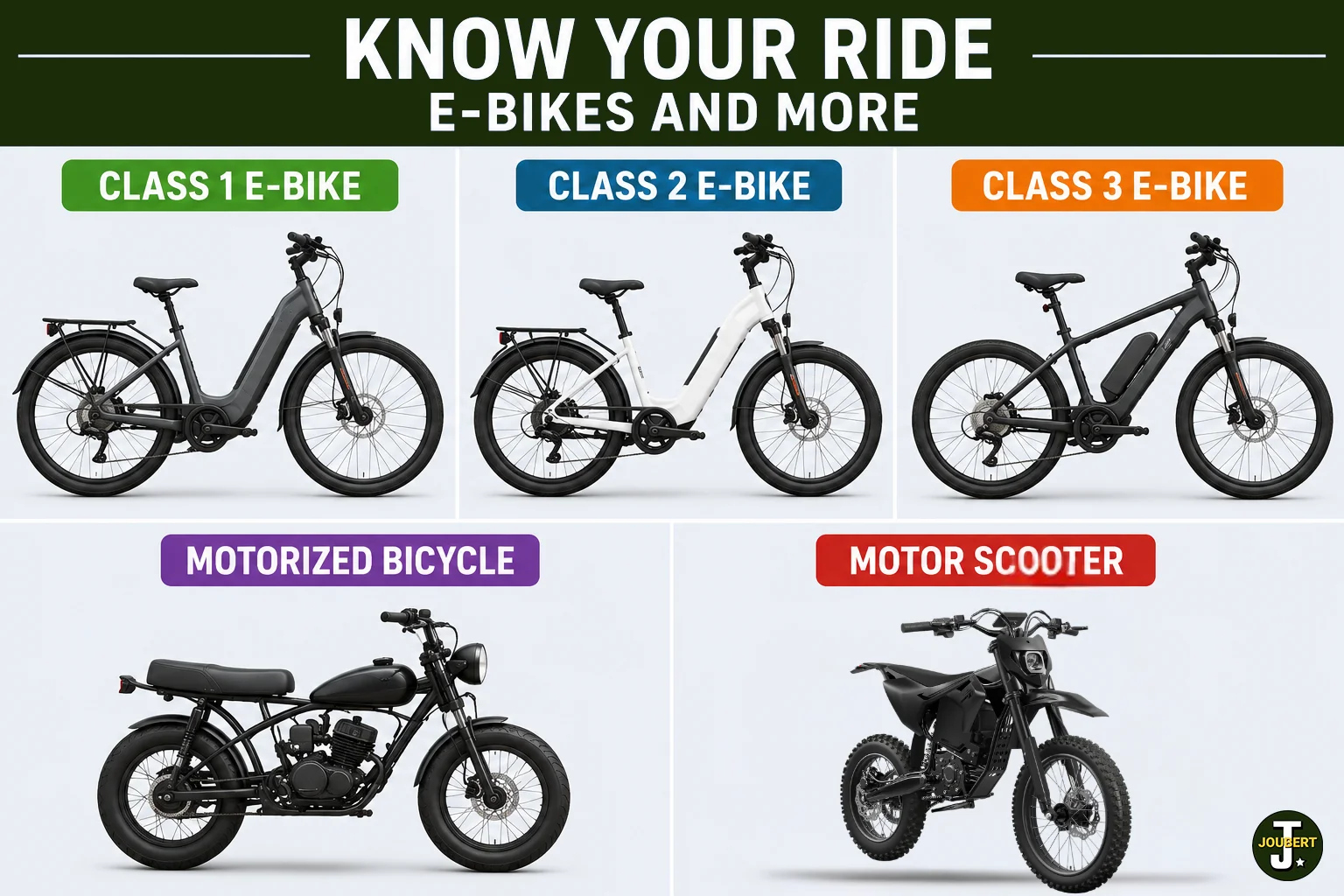
A common U.S. class framework is:
- Class 1: Pedal-assist, up to 20 mph, no throttle
- Class 2: Throttle-activated, up to 20 mph
- Class 3: Pedal-assist, up to 28 mph, typically no throttle
Louisiana law also addresses electric-assisted bicycles. Under Louisiana Revised Statutes (RS) 32:204, an electric-assisted bicycle is generally treated similarly to a bicycle, but there are key rules—especially around classification, labeling, and Class 3 requirements.
Louisiana-specific legal points under RS 32:204 include:
- E-bikes have manufacturer label requirements (classification number, top-assisted speed, motor wattage).
- Riders cannot tamper/modify the bike to change classification (unless labeling is properly replaced).
- The motor must disengage when the rider stops pedaling or when brakes are applied.
- Class-based restrictions may apply on certain trails and shared-use paths.
- Class 3 helmet/age/speedometer rules:
- No one under 12 may operate a Class 3 e-bike
- Operators and passengers of Class 3 must wear an approved bicycle helmet
- Class 3 e-bikes must have a speedometer displaying speed in mph
Important: Laws can vary by local area and by the crash context.
5) Do I need to wear a helmet?
In many places, helmet rules differ depending on location and e-bike class. Helmet guidance is also strongly tied to speed.
Even where helmets aren’t always required for every rider, safety experts emphasize their importance—because e-bike crashes often cause serious head injuries.
Louisiana-specific helmet rules (RS 32:204):
- For Class 3 e-bikes: helmet use is required for operators and passengers (approved bicycle helmets).
Louisiana crash relevance: Helmet use (or non-use) can be a key fact in injuries, medical outcomes, and insurance/legal arguments.
6) Do I need insurance?
You generally do not have to carry e-bike insurance the way you must for cars. However, you may want coverage for:
- Theft
- Damage
- Repair/replacement
- Sometimes liability, depending on your policy structure
Louisiana crash relevance: Even without an insurance requirement, crash claims may involve negotiating with insurers and investigating fault (drivers, road conditions, product issues, or even e-bike modifications).
Federal Law and E-Bikes (What It Regulates—and What It Doesn’t)
At the federal level, e-bikes are regulated as bicycles under the Consumer Product Safety Commission (CPSC) (CPSC focuses on manufacture/sale, not how you use the bike day-to-day).
A federal definition of a “low-speed electric bicycle” generally includes:
- Fully operable pedals
- Motor under 750 watts
- Maximum speed under 20 mph on level ground when powered solely by the motor
Federal law typically does not set broad nationwide rules for how e-bikes must be ridden, except for certain trail-use provisions (where state/local rules also apply).
Louisiana crash relevance: The distinction between federal classification for product rules and state rules for operation can matter when proving whether an e-bike behaved legally and as designed.
E-Bikes and Micromobility (Why Laws Keep Changing)
E-bikes are part of a larger micromobility category that includes e-scooters, skateboards, and other devices. Regulations for these devices evolve at different speeds, and local rules often control where and how they can be used.
Louisiana crash relevance: If a crash happens where an e-bike is restricted, or where traffic rules are ambiguous, the facts of the location and the device class can become critical.
Tips to Reduce Risk (And Improve Outcomes If a Crash Happens)
- Practice starting, stopping, and turning e-bikes can be heavier and may have longer stopping distances.
- Ride with visibility in mind (especially at night).
- Know your e-bike class and do not modify the bike to exceed intended limits.
- Use a helmet and consider the right helmet for the speeds you ride.
- If you’re involved in a crash, seek medical attention head and neck injuries can worsen over time.
Louisiana Help After an E-Bike Accident
E-bike injuries can involve major trauma, especially when collisions include head impacts or high-speed vehicle conflicts. If you or someone you love was hurt in an e-bike crash in Louisiana, Joubert Law Firm can help you understand how Louisiana rules apply and work to pursue compensation.
Call for a free case evaluation available 24/7.